tecumsehproject.org
  • Blog
  • home
    • About
  • Capitalism and Unhappiness
    • Unhappiness
  • Pleonexia and Psychopathy
    • Psychopathy
  • Human Nature; Empathy and Equity
  • Happiness/Living Well
  • Economics for the 99%
  • Hippies/Beat
    • Music
  • The Library

As Donald Trump Denies Cliamte Change These Kids Die of It

1/8/2017

0 Comments

 
Repost from NYT Sunday Review January 8, 2017; A powerful essay; read-more includes 7 min. video clip

As Donald Trump Denies Climate Change, These Kids Die of It
Nicholas Kristof JAN. 6, 2017
 
TSIHOMBE, Madagascar — She is just a frightened mom, worrying if her son will survive, and certainly not fretting about American politics — for she has never heard of either President Obama or Donald Trump.
What about America itself? Ranomasy, who lives in an isolated village on this island of Madagascar off southern Africa, shakes her head. It doesn’t ring any bells.

Yet we Americans may be inadvertently killing her infant son. Climate change, disproportionately caused by carbon emissions from America, seems to be behind a severe drought that has led crops to wilt across seven countries in southern Africa. The result is acute malnutrition for 1.3 million children in the region, the United Nations says.

Trump has repeatedly mocked climate change, once even calling it a hoax fabricated by China. But climate change here is as tangible as its victims. Trump should come and feel these children’s ribs and watch them struggle for life. It’s true that the links between our carbon emissions and any particular drought are convoluted, but over all, climate change is as palpable as a wizened, glassy-eyed child dying of starvation. Like Ranomasy’s 18-month-old son, Tsapasoa.

Southern Africa’s drought and food crisis have gone largely unnoticed around the world. The situation has been particularly severe in Madagascar, a lovely island nation known for deserted sandy beaches and playful long-tailed primates called lemurs.

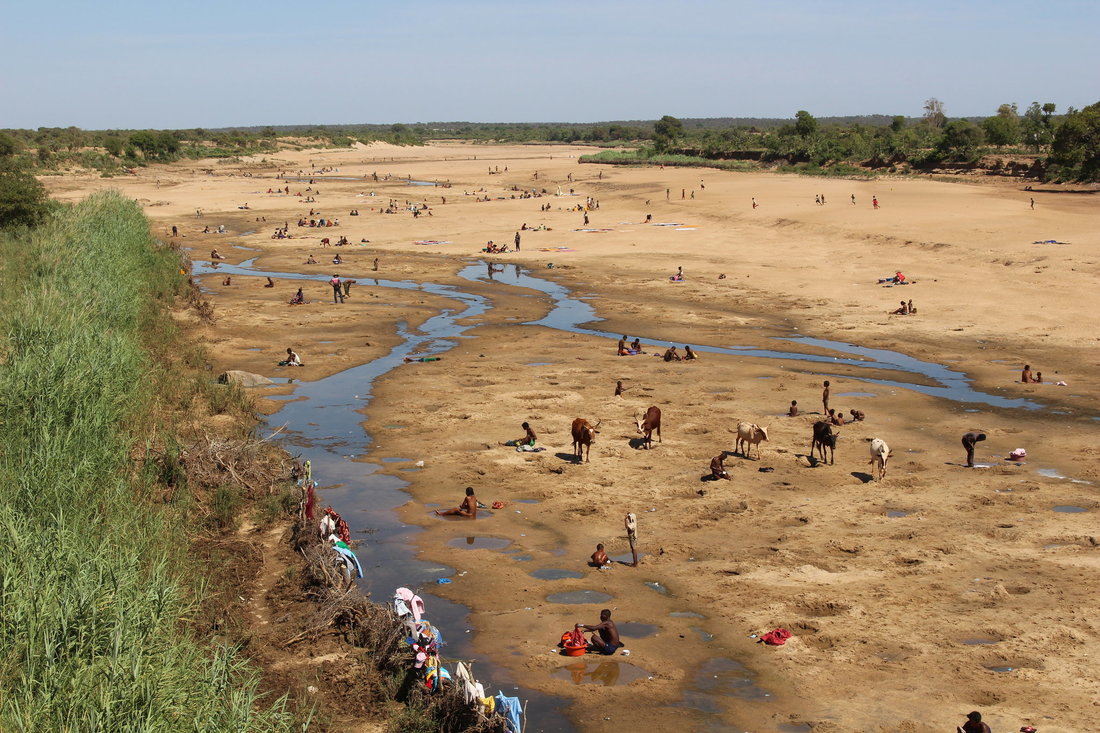
​But the southern part of the island doesn’t look anything like the animated movie “Madagascar”: Families are slowly starving because rains and crops have failed for the last few years. They are reduced to eating cactus and even rocks or ashes. The United Nations estimates that nearly one million people in Madagascar alone need emergency food assistance.
Picture
Many rivers and wells have dried up in southern Madagascar, forcing people to buy water that is trucked in. CreditNicholas Kristof/The New York Times

Read more (please) here

0 Comments

Earth to Trump: Join the Resistance in Chicago Jan 15th

1/2/2017

0 Comments

 
#EARTH2TRUMPJoin the Resistance to Trump's Attack on Our Environment and Civil Rights

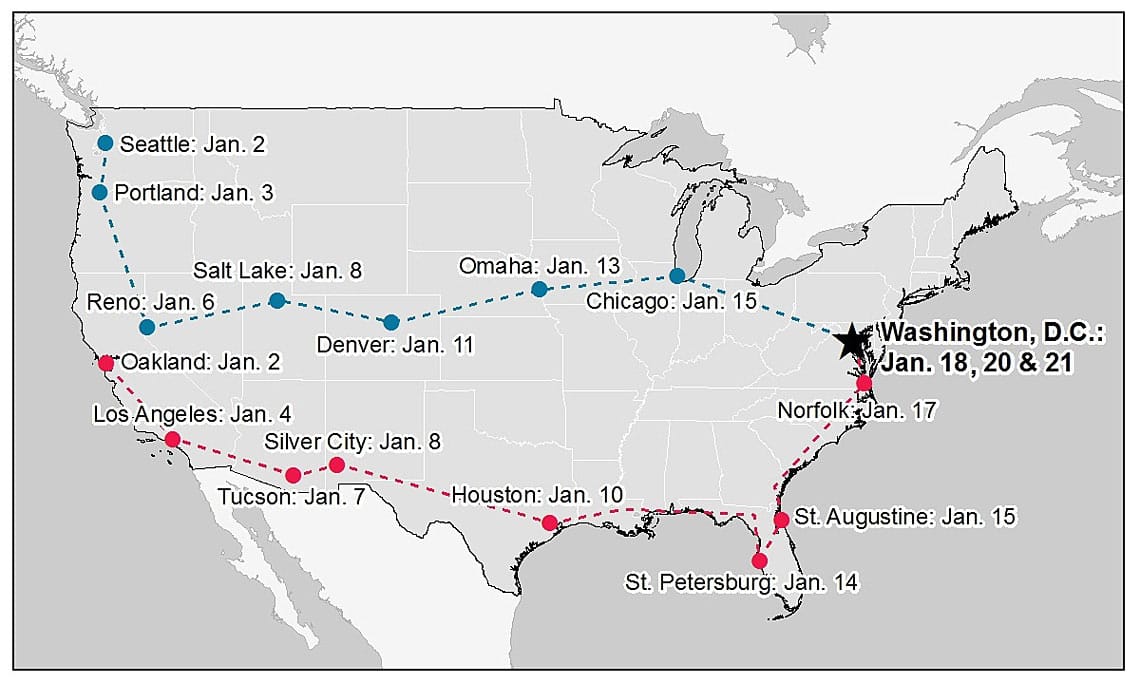
The #Earth2Trump Roadshow is coming to a town near you in January.
The roadshow is rallying and empowering defenders of civil rights and the environment to resist Trump's dangerous agenda. Stopping in 16 cities on its way to Washington, D.C., it will bring thousands of people to protest at the presidential inauguration.
Picture

Read more: http://www.biologicaldiversity.org/campaigns/earth2trump/
​

Picture
0 Comments

Dakota Pipeline Protest-Chicago

11/9/2016

0 Comments


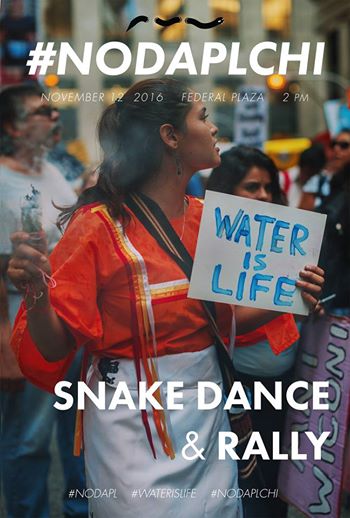
​Saturday, November 12th, 2016: Chicago in Solidarity with Standing Rock

2-5PM at Federal Plaza, corner of Jackson and Dearborn

Hello, Chicago water protectors! We are very excited to announce that we’re holding our second #NoDAPLCHI rally! Our goal is to bring as many people together as possible to show support and bring media attention to what is happening in Standing Rock. Our rally will also include a celebration showcasing the resiliency of indigenous people through dance.
Please share this event and invite friends!
event page: https://www.facebook.com/events/813409268799705/
#noDAPL #waterislife
​


Picture

Video Link: Police & Military Attack Oceti Sakowin Treaty Camp 

​https://environmentalcritique.wordpress.com/2016/10/29/police-military-attack-oceti-sakowin-treaty-camp/


Frank Waln @ Reject and Protect

0 Comments

Shakespeare's Climate Change

6/13/2016

0 Comments

 
Bill Jordan is one of the nicest and smartest people I’ve ever met—two characteristics that naturally go together.  He has a PhD in botany, but unlike many who study deeply, he refuses to be contained by that discipline or any other.  One of the great markers of modernity is the specialization of knowledge and this has produced what many call a “silo effect”.  Botanists do botany; engineers engineer and philosophers philosophize.  They stay in their silos. 
 
Bill is almost wildly interdisciplinary—his interests range from ecology to art, religion and anthropology, ritual, poetry and philosophy.  He studies all this and more, deeply, incorporating all into his being joining them fluidly as if there were never any separation between them.  And in fact, there never has been.  Silos are a fiction—a fiction most often employed towards some form of instrumentalization.  Usually profit.
 
Bill strips away the fiction and aims to see interconnections and relationships—and to speak and write about these in ways that touch humans deeply.  He has done this here, in his new blog, Environmental Prospect, and in particular with his work on "The Values Project".
 
In order to understand the world we have to place ourselves in it.  From there we must determine what is of value to us—true value—which is, in effect, asking what it means to be human.  Part of this work is to ask where values come from…and so follow Bill and his work.  It is my work and yours as we move through, and try to remake our home in the Anthropocene.
 
Excerpt from The Values Project:
 
The Dark Path to Beauty
In this department of Environmental Prospect we are exploring a theory of values, based mainly on the work of literary critic Frederick Turner, that we believe has important implications for environmental thinking and practice and so, ultimately, for the future of our planet.
Turner proposes:
  • That the experience of value begins not with simple delight in nature, relationships or the experiences of beauty, mystery or meaning, but with the darker aspects of experience, crucially, for Turner, shame—that is, not guilt, which is the response of the conscience to moral transgression, but the response of the self to its awareness of and dependence on an others-than-itself, beginning with the body itself.
  • That ritual and, more broadly, the fine arts, or what I have called the technologies of the imagination, provide the tools we need to deal with this troubling aspect of experience in a productive way, passing, as Turner writes, through shame to beauty.
Beauty, for Turner, is the value of values, the foundation of the complex of transcendent values such as community and meaning that underlie the behavior on which, successful societies have understood, the world—or at least the environment—really does depend.

​To introduce this idea, we can do no better than turn to the “climate change” scene in Shakespeare’s “A Midsummer Night’s Dream”.
​

Continue reading at Environmental Prospect 

See Bill's book, The Sunflower Forest: Ecological Restoration and the New Communion With Nature, William Jordan (U of California press)  My review here.

EJ Tangel
0 Comments

Psychopathy and Capitalism

3/19/2016

0 Comments

 
As I've been saying throughout this  blog and website, these two are, in fact, natural pairs while at the same time unnatural--they are aberrations, deviations that have become perversely normative.  Jon Ronson, author of The Men Who Stare at Goats and The Psychopath Test, gets it exactly right in this wonderfully concise 3 minute interview.

www.ttbook.org/listen/79946

​EJ Tangel
0 Comments

Chicago matters; the (r)evolution has begun

3/12/2016

0 Comments

 
I'm strangely, surprisingly, even joyfully proud of my city this morning.  And not a little choked up.

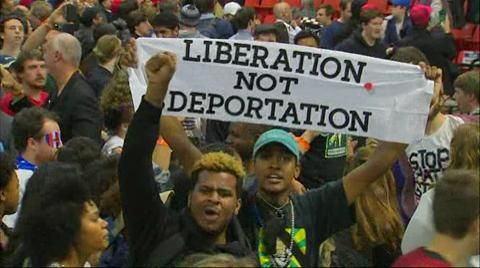
​We've rallied around justice and thrown out Donald Trump, a hate-mongering fascist.  And we've done it peacefully.  I'm proud of the people of Chicago, who came together at a moment's notice and organized so well.  I'm especially proud of the passionate young organizers, especially the University of IL at Chicago students, whose Social Justice work is bearing fruit, a harvest of seeds planted by Jane Addams and others nearly 100 years ago. 

​God bless them, and Godspeed to us all...

EJT
Picture
Picture
Picture
Picture
Picture
Picture


The (r)evolution has begun...

Picture
Picture
Picture
Picture
Picture
Picture
0 Comments

Financial despair, addiction and the rise of suicide...

2/15/2016

0 Comments

 
The Guardian
 
Financial despair, addiction and the rise of suicide in white America
The death rate for white Americans aged 45 to 54 has risen sharply since 1999, but Montana officials wrestle to explain reasons why the state has the highest rate of suicide in the US at nearly twice the national average – and it’s rising
Chris McGreal in Butte, Montana
Sunday 7 February 201608.28 EST

http://www.theguardian.com/us-news/2016/feb/07/suicide-rates-rise-butte-montana-princeton-study?

​
0 Comments

a complete and utter failure

1/29/2016

0 Comments

 
The primary function of an economy is to enable people to live.  In every respect, ours has been a complete and utter failure.

EJT
​

0 Comments

Fat Bastard and the Upside Down World

1/10/2016

0 Comments

 
PictureYoutube
 original essay posted April 2013

The comfort of the rich depends on an abundant supply of the poor.    -Voltaire
 
...and the compliance of the working and middle classes.
 EJT
         
         In the comic hit movie, Austin Powers: The Spy Who Shagged Me, Mike Myers’ Fat Bastard character—who, as you might expect is always hungry—turns to Mini-me and demands, in his bellowing mock-Scottish bravado, “I’m bigger than you—and higher up the food chain.  Get in my belly!”  And then licks his chops while singing, “ba…ba..ba…baby back, baby back ribs…”

          Perhaps this is a telling example of being utterly absorbed in, and confused by one’s worldview.  Mini-me simply scoots away of course, ironically into the loving arms of Dr. Evil, leaving Fat Bastard un-sated, yet nevertheless still deliriously full of himself.  
 
         Despite appearances—and our hubristic bravado—we humans “on the top of the food chain” are actually the most dependent beings in existence—we rely on everyone and everything “below” us.   Author Michael Pollan’s lengthy and eye-opening essay for the NYT Magazine, “Some of My Best Friends are Germs”, reveals to us that we humans are, in reality, a mere 10% ourselves, the other 90% is actually an ongoing project of other beings, primarily bacteria and microorganisms going about their business.[1]   But for them we’d be nearly-nothing. 
 
        So what sense does it make to imagine ourselves at the top of anything?  Don’t we ordinarily think of dependant beings at some sort of bottom?  The child and the invalid are dependent on their caretakers.  So too are we humans dependent on the entire structure of ecology—which, as we are just beginning to understand, includes not just the flora and fauna all around us, but other people too.  Perhaps we can understand Max Ehrmann’s line from the Desiderata in a new way.  “You are a child of the universe…” indeed.

          And wealth works similarly, reflecting in parallel the imagined hierarchy we impose on Nature.  The wealthy suffer hallucinations, seeing themselves as independent, as above everyone else.   But in reality, the wealthy are wholly dependent on all of the people “below” them, from their own workers to the teachers who educated those workers, to the people who maintain and operate buildings, the means of transportation, systems of exchange and so on, and on and on… 
 
        The wealthy are utterly dependent on the entire infrastructure of nature/culture--they are dependants—more so than any other economic strata.  Now this is not hard to imagine.  Donald Trump is far more dependent on the Panama Canal, for example, than anyone you know. 
 
        The wealthy are not inter-reliant; the wealthy are held aloft by the compliance and work and servitude of others—some of whom they pay, or exploit, or from whom they simply receive unacknowledged and unearned benefits.   Yet many strut about the world, full of themselves, like Fat Bastard (s), as if they fashioned it all from their own hands.        
   
         Thus, shouldn’t we think of the wealthy as residing at the bottom of our society?  And therefore, shouldn’t they be treated just like many of them treat the poor?  Reality is a bitch! 
 
         Of course I’m just having fun.  We certainly can’t cure dystopia with the hubris that created it.  We need to treat the rich the way most of us try to treat the poor: we help them because we feel for them.  Most of us are chock-full of empathy, even if it doesn’t show that often.  For me, the older I get—the more I’ve seen—the more I cry, as if the world has been waiting for me to notice. 
 
        We need to dismantle the illusory hierarchy that incents the wealthy towards destructive hubris, leaving them empathically poor and all of us poorer, so we can welcome them into human inter-dependency.  As Thict Nhat Hanh might say, such a generous and compassionate act could bring multiple benefits, to those helping as well as to those helped.  Who knows how far that wind may blow?  

          How do we help the wealthy and ourselves at the same time?  We refuse to participate in their charade.  We drop out of their hierarchically structured economy and build a new one that acknowledges our dependence on each other and all others.  This may take the form of public banking, co-ops and so on.  The world is a rich place for ideas.  It will certainly require new and stronger relationships with each other, and the natural world. 
 
          But to unlock real creativity and enable a critical and kinetic mass, first we have to be unchained from the hegemony of imagined hierarchy.  We have to begin to see more clearly.  Humans are the most dependant beings, and the wealthy are the most dependant humans.
 
        The older I get the more I come to understand that reality is the opposite of the proffered convention—this because the profferers of convention have a vested interest in making and keeping the world structured just so. There was no vote on this.  The poor suffer a lack of justice, which is what Voltaire meant when he said, "The comfort of the rich depends on an abundant supply of the poor."  Today's rich are far richer and so have conscripted the compliant allegiance of the working and middle classes, who now join the poor suffering a lack of justice all within a collapsing ecosystem. 
 
        But willful poverty, as both a personal and political act, is something to be achieved—or better, it is something to be created as one might make art from detritus.   Finding satiety for yourself, and providing satiety for others, is a means and ends united; the wholeness of the individual secure in the inter-reliance of the community.  
 
        Not that it will be easy.  Yet it is a necessary dismantling of the hierarchy that is itself a direct cause of suffering and planetary degradation.  
 
        Free from the servitude that feeds Fat Bastard, the willful poor weaken him and are empowered to seek authentic concert with the world—real relationships with each other and the ecosystem—and thereby change the world.  

EJ Tangel
January 10, 2016


[1] Some of My Best Friends are Germs, Michael Pollan, NYT Magazine May 15, 2013 http://www.nytimes.com/2013/05/19/magazine/say-hello-to-the-100-trillion-bacteria-that-make-up-your-microbiome.html?pagewanted=all&_r=0  accessed June 13, 2013


0 Comments

Twas the night before Christmas

12/23/2015

0 Comments


Twas the night before Christmas
but up on Wall Street
the bankers still looked 
for signs of fresh meat.


"Santa, give us a city
that we might bleed dry
with complex fixed rate swaps
and a good alibi!"


But when Santa arrived
he was not amused
at the number of cities
Wall Street had abused.


"Ho ho ho," Santa laughed
"You're all in the tank. 
What each city needs
is a good public bank!"
 
And out of his bag
Santa pulled with much glee
a bank for every
municipality.


And I heard him exclaim 
amidst bankers' sad looks,
"Democratize money
and bypass these crooks!"


Happiest of holidays from the Public Banking Institute, and thank you for a wonderful and productive 2015.  See the announcements at the bottom of this news blast on two ways you can help PBI during the holidays! 

www.publicbankinginstitute.org

​
0 Comments
<<Previous
Forward>>

    RSS Feed


    Archives

    February 2018
    December 2017
    August 2017
    June 2017
    February 2017
    January 2017
    November 2016
    June 2016
    March 2016
    February 2016
    January 2016
    December 2015
    July 2015
    June 2015
    May 2015
    March 2015
    February 2015
    December 2014
    November 2014
    October 2014
    September 2014
    August 2014
    July 2014
    June 2014
    May 2014
    April 2014
    March 2014
    February 2014
    January 2014
    December 2013
    November 2013
    October 2013
    August 2013
    July 2013
    June 2013
    May 2013
    April 2013
    October 2012
    September 2012
    August 2012
    July 2012
    May 2012
    April 2012

    Categories

    All
    Baudrillard
    Capital
    Eugene Fama Nobel Prize
    Neoliberalism
    Phillip Mirowski
    Pleonexia
    Postnatural; Epistemology; Ocean Acidification; Narcissus; Carbon; Climate Change; Jevon's Paradox
    Simulacrum
    Simulations
    Wall Street

    RSS Feed